
CME on Perinatal infections and group B Streptococcus, Kathmandu
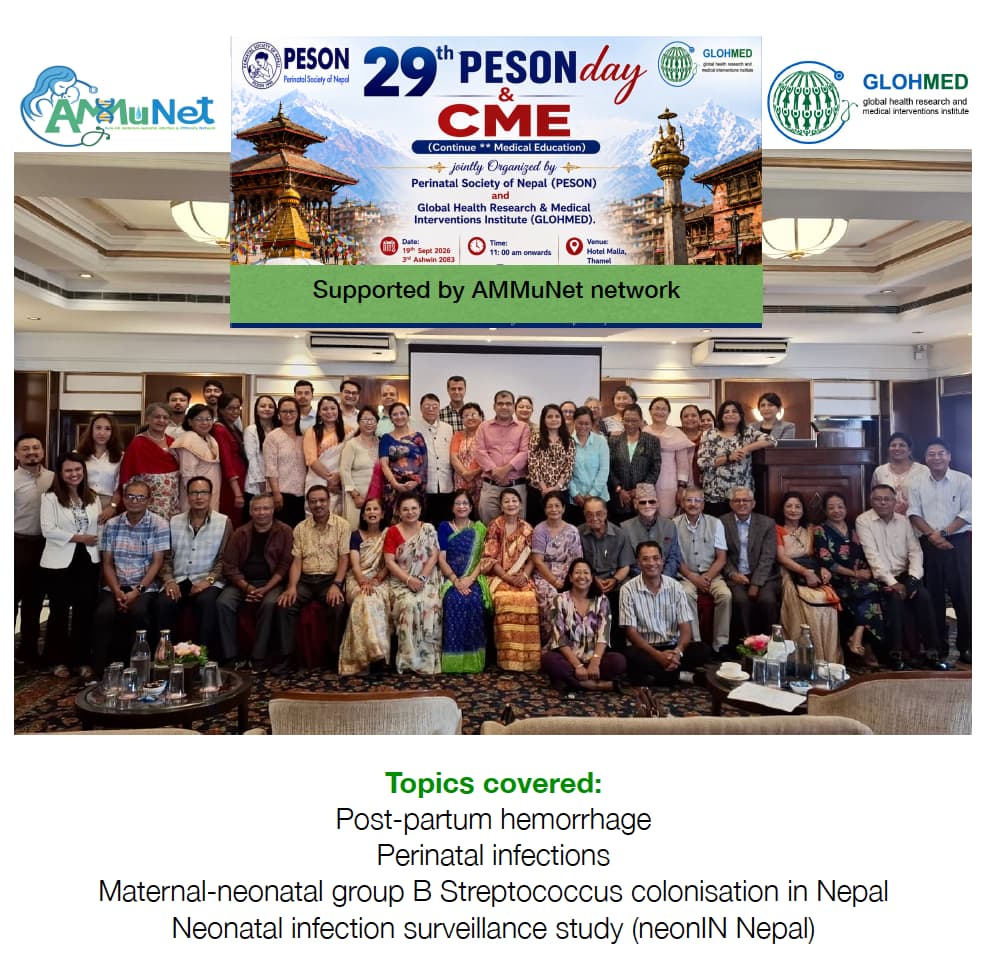
On 19 September 2026, GlohMed and Perinatal Society of Nepal (PESON) organized a continued medical education (CME) on ‘Perinatal infections’, with focus on group B Streptococcus infection in pregnant mothers and newborns—a leading cause of early-onset neonatal sepsis (EONS), meningitis and neurodevelopment impairment. This initiative was supported through the Asia-UK maternal-neonatal infection and iMMunity Network (AMMuNet). This one-day event explored evidence gaps and research priorities on maternal-neonatal infections, with remarkable participation of around 60 delegates; Obstetricians, neonatologists, midwives, nurses, microbiologists, public health professionals, and researchers.
Maternal-neonatal health has always been a priority for the government as well as the non-government health sector support. However, the annual health reports published by the DoHS indicate a substantial proportion of perinatal morbidity and mortality including early neonatal hospitalizations reported to have an unspecified cause, which could be likely caused by bacterial infections including group B Streptococcus.
While the morning session was focused on review of PESON annual activities, the participants engaged on perinatal infections. Dr Suraj Bhattarai (Principal investigator, Nepal GBS epi study) presented the first evidence from Nepal–findings of the pilot study which confirmed GBS circulation in Nepal with ~14% maternal colonization rate and ~32% transmission from colonized mothers to their newborns. The discussion extended to diagnostic challenges in our low-resourced health facilities, intrapartum antibiotics, and screening as well as prevention strategies.
We thank all contributors of this successful collaboration between GlohMed and Perinatal Society of Nepal (PESON). GlohMed continues to raise public health awareness and sensitize care providers on this important topic.