
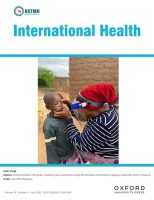
Acute respiratory infections (ARIs) continue to be one of the leading causes of illness and death among children under five in Nepal. Local estimates suggest that nearly 290 out of every 1,000 children are affected by these infections each year. On paper, managing ARIs seems fairly straightforward. In practice however, one of the biggest challenges is figuring out whether an infection is viral or bacterial. Without access to advanced diagnostic tools, this distinction is often difficult to make. Because of this, antibiotics are frequently prescribed as a precaution, even in cases where they may not actually be needed.
To understand what was happening in real clinical settings, Bhattarai S. et al. conducted a study in Kathmandu between January and July 2022. The study observed 104 pediatric consultations across one public and one private hospital.
Interestingly, in this study, data collectors (trained medical doctors) did not openly identify themselves as observers. Instead, they attended outpatient consultations while posing as relatives of the patients (disguised observation). The reasoning was simple: if doctors (paediatricians) knew they were being observed, their clinical assessment and prescribing behaviour might change. Data collectors assessed protocol compliance, antibiotic use, and contextual factors that could impact antibiotic decisions. By blending into the background, the researchers were able to get a better picture of what routine practice actually looked like.
This study found high compliance (76%) to national ARI diagnosis protocol.
Overall, antibiotics were prescribed in 64% of the consultations. However, 54% of those antibiotic decisions were deemed inappropriate, and 57% of antibiotic prescriptions belonged to WHO “Watch” category.
Interestingly, and the unique observation of this study was that half of the consultations lasted <10 mins (inadequate), and 14% consultations were interfered by the pharmaceutical representatives; both at higher proportions in public facility than private.
This study highlights the need for stronger antimicrobial stewardship efforts in pediatric care in Nepal. Supporting clinicians in following first-line treatment recommendations more consistently and improving the consultation environment could help reduce unnecessary antibiotic use while improving the quality of care provided to children.
The authors also suggest that affordable point-of-care diagnostic tests may have an important role to play. If clinicians are better able to distinguish between bacterial and viral infections, they can make more informed treatment decisions and avoid prescribing antibiotics when they are not needed. In the long run, measures like these could help slow the growing problem of antimicrobial resistance in the region.
The Paediatric Antimicrobial Stewardship Research Group (PaedASR) Nepal thanks all participants of this study, as well as the clinicians involved at both sites, data collectors, site administration units, and the supporters.
This article has been published in the Royal Society of Tropical Medicine and Hygiene International Health. Full article can be assessed through this link: https://doi.org/10.1093/inthealth/ihag054
Citation:
Suraj Bhattarai, Ram Hari Chapagain, Rabin Thami, Jaya Dhungana, Biplav Ghimire, Satish Prasad Barnawal, Ramanandan Prasad Chaudhary, Ajit Rayamajhi, for the Paediatric Antimicrobial Stewardship Research Group Nepal , Outpatient antibiotic prescribing for acute respiratory infections in children: an observational study in Nepal, International Health, 2026;, ihag054, https://doi.org/10.1093/inthealth/ihag054